Georgia summers bring heavy rain, saturated soil, high winds, and severe thunderstorms that can quickly turn a weakened tree into a major property hazard. The problem is that most dangerous trees show warning signs long before they fail.
Knowing what to look for can help homeowners take action before storms cause damage to homes, vehicles, fences, or nearby structures. In many cases, early pruning or removal can prevent an emergency situation entirely.
At Arbor Equity, our certified and master arborists help homeowners across Augusta, Lake Oconee, Athens, Greensboro, Madison, and surrounding Georgia communities identify high-risk trees before storm season peaks.
Why Summer Storms Increase Tree Failure Risk
Summer storms create the perfect conditions for tree failure in Georgia.
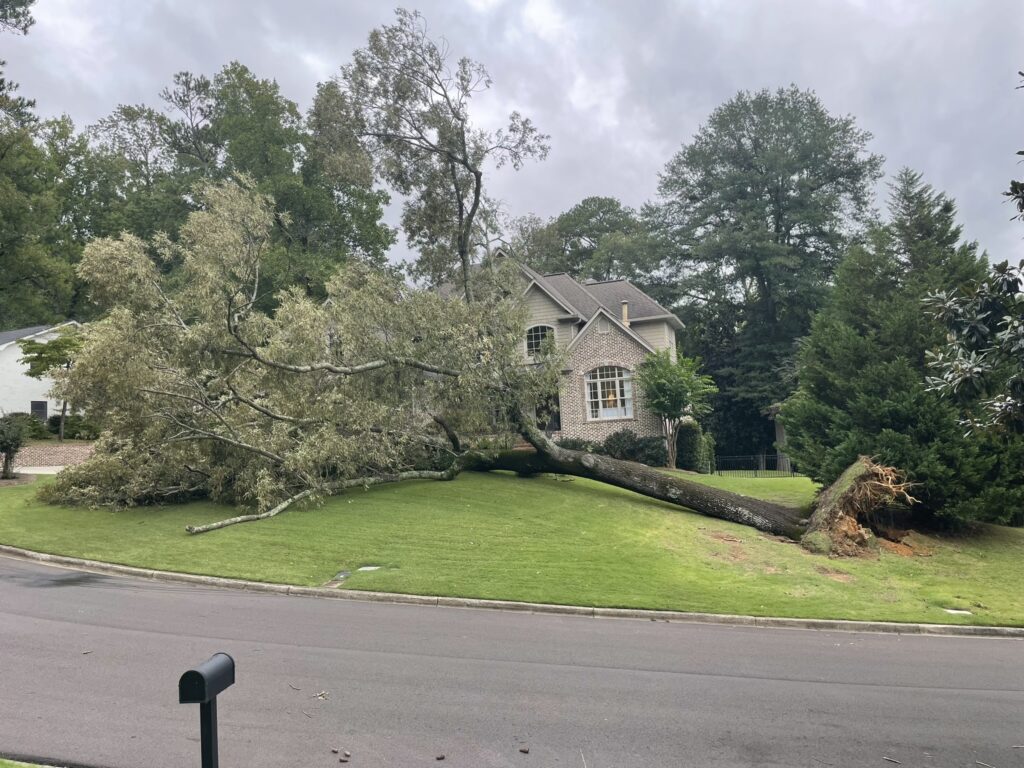
High winds place stress on trunks, limbs, and root systems. At the same time, prolonged rain saturates the soil, weakening root stability and making it easier for entire trees to uproot.
Even healthy-looking trees can fail if structural defects are already present. Trees that are stressed, decaying, damaged, or poorly structured are especially vulnerable once severe weather arrives.
Some of the most common storm-related tree failures include:
- Uprooted trees
- Split trunks
- Large limb failures
- Hanging branches
- Root plate failure
- Entire canopy collapse
The earlier these problems are identified, the safer your property becomes heading into storm season.
Warning Signs a Tree May Be Dangerous
A Tree Is Suddenly Leaning
Not all leaning trees are dangerous, but a recent or worsening lean is a major warning sign.
Trees that begin leaning after storms, construction, or soil erosion may have compromised root systems. If you notice exposed roots, cracked soil, or lifting ground near the base of the tree, the tree could be unstable.
This is especially concerning for large pines and mature hardwoods near homes or driveways.
Signs to watch for include:
- Soil heaving near the roots
- Leaning that appears worse over time
- Exposed or damaged roots
- Trees leaning toward structures
A certified arborist can determine whether the tree can be stabilized or if removal is the safest option.
Cracks in the Trunk or Major Limbs
Large cracks are one of the clearest indicators of structural weakness.
Cracks may develop from previous storm damage, internal decay, lightning strikes, or heavy limb stress. Some cracks are visible on the outside, while others may extend deep into the trunk.
Trees with vertical trunk cracks or splitting branch unions are at significantly higher risk of failure during high winds.
Pay close attention to:
- Deep trunk splits
- Cracks where large limbs connect
- Bark separating from wood
- Fresh splitting after storms
These issues often require immediate evaluation.
Dead or Hanging Branches
Dead branches are not just a tree health issue. They become dangerous projectiles during storms.
Large dead limbs can break without warning, especially during summer thunderstorms with strong wind gusts. Even smaller hanging branches can damage roofs, vehicles, fences, or injure people below.
Deadwood is especially common after drought stress, insect activity, or previous storm damage.
Common warning signs include:
- Branches without leaves during the growing season
- Brittle or peeling bark
- Hanging limbs caught in the canopy
- Large dead sections in the crown
Routine pruning can often reduce risk before storm season intensifies.
Hollow or Decaying Trunks
Internal decay weakens the structural strength of a tree over time.
Many trees can survive with some decay, but severe hollowing or fungal breakdown significantly increases the chance of collapse during storms. Unfortunately, decay is not always obvious from the outside.
Signs of possible internal decay include:
- Large cavities
- Mushrooms or fungal growth at the base
- Soft or crumbling wood
- Hollow sounds when tapped
- Carpenter ant activity
Mature oaks are particularly vulnerable to hidden internal decay in Georgia landscapes.
Root Problems and Soil Movement
Healthy roots anchor the entire tree. When roots become damaged or unstable, failure risk increases dramatically.
Root damage commonly occurs from:
- Construction activity
- Soil compaction
- Grade changes
- Trenching
- Drought stress
- Repeated flooding
One of the biggest red flags is soil lifting around the root flare during windy conditions.
Warning signs include:
- Cracked or raised soil
- Exposed structural roots
- Fungal growth near roots
- Sparse canopy combined with instability
- Tree movement during wind
Because roots are underground, homeowners often miss these issues until storms expose the problem.
Previous Storm Damage
Trees that have already experienced storm damage are more likely to fail again.
Even if a tree survived a previous storm, hidden structural weaknesses may remain inside the trunk or limbs. Improper pruning after storm damage can also create future hazards.
If your tree has lost large limbs, suffered trunk wounds, or experienced lightning damage, it should be professionally inspected before the next severe weather season.
Which Trees Are More Vulnerable in Georgia?
Some tree species are naturally more susceptible to storm damage than others.
In Georgia, the following trees often experience storm-related failures:
Pines
Tall pines can become unstable in saturated soil, especially if root systems are shallow or compromised.
Water Oaks
Water oaks grow quickly but often develop weak branch attachments and internal decay as they mature.
Bradford Pears
These trees are notorious for splitting due to poor branch structure.
Large Mature Hardwoods
Older oaks and hardwoods with decay or canopy imbalance can fail under heavy wind loads.
That does not mean these trees always need removal. Proper pruning, inspections, and plant health care can often improve safety and longevity.
What To Do If You Notice These Warning Signs
Schedule a Professional Inspection
If you notice multiple warning signs, start with a professional tree risk assessment.
Certified arborists can identify structural problems, evaluate root stability, and determine whether pruning, cabling, monitoring, or removal is appropriate.
Early action is usually far less expensive than emergency storm cleanup.
Consider Preventative Pruning
Strategic pruning can reduce storm risk by:
- Removing deadwood
- Reducing end weight on heavy limbs
- Improving canopy balance
- Eliminating weak branch unions
Preventative pruning is especially valuable before peak summer storm activity begins.
Know When Removal Is Necessary
Some trees simply become too hazardous to keep.
Removal may be recommended if a tree has:
- Severe structural decay
- Major root instability
- Significant trunk cracks
- Extensive storm damage
- High likelihood of failure near structures
A qualified arborist can help determine whether the risk outweighs the value of preserving the tree.
Why DIY Tree Work Is Risky
Dangerous trees should never be treated as DIY projects.
Storm-damaged or structurally compromised trees can behave unpredictably during pruning or removal. Limbs under tension, hidden decay, and unstable root systems create serious safety risks.
Professional crews use specialized equipment, rigging systems, and safety protocols to manage hazardous tree work safely and efficiently.
Attempting removal without proper training can lead to severe injury or property damage.
Schedule a Hazardous Tree Inspection Before Storm Season Hits
Most tree failures give warning signs before they happen. Leaning trunks, dead branches, cracks, decay, and root instability often indicate a tree is becoming unsafe — especially before Georgia’s summer storms arrive.
Identifying these problems early allows homeowners to reduce risk, protect property, and avoid emergency situations during severe weather seasons.
Arbor Equity provides professional tree inspections, pruning, hazardous tree assessments, and tree removal services throughout Augusta, Lake Oconee, Madison, Greensboro, Athens, Covington, and surrounding Georgia communities.
Ready to schedule a tree risk assessment before storm season? Call us today at 706-817-2094 or schedule by contacting us online.