When a tree starts showing signs of stress, most homeowners focus on what they can see: thinning leaves, dead branches, discoloration, or a sparse canopy.
But many tree health issues don’t start in the canopy at all.
In fact, some of the most serious causes of tree decline begin underground, where root damage can go unnoticed for years before visible symptoms appear. By the time a tree starts looking unhealthy, its root system may have already been struggling for a long time.
In Georgia, drought conditions, soil compaction, construction activity, and poor drainage are among the most common hidden root problems affecting tree health.
Understanding what happens below the soil surface can help homeowners identify issues earlier and potentially prevent the loss of valuable trees.
Why Tree Roots Matter More Than Most Homeowners Realize
Tree roots do much more than simply anchor a tree in place.
Roots absorb water and nutrients, store energy, and provide stability during storms and high winds. Without a healthy root system, even a mature tree can begin to decline.
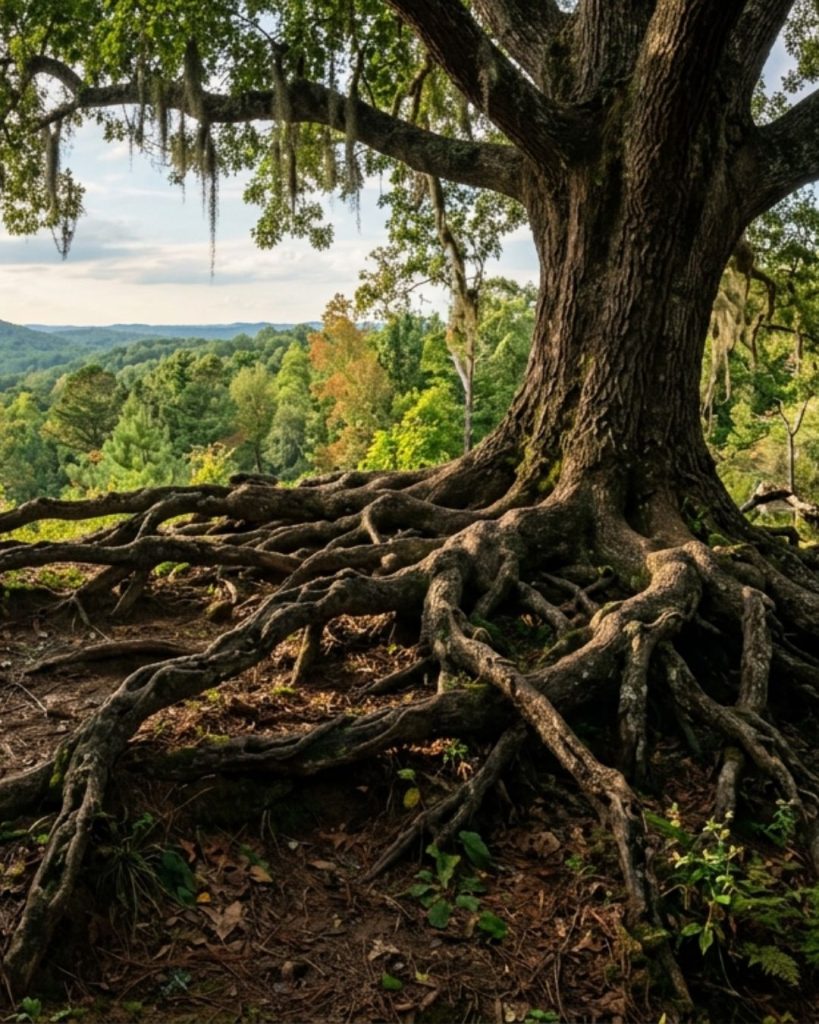
Many homeowners assume roots grow deep into the ground. While some structural roots extend downward, most of a tree’s absorbing roots are located within the top 12 to 18 inches of soil. These roots are highly vulnerable to damage from construction, compaction, drought, and changes in soil conditions.
A tree’s root system can also extend two to three times wider than its canopy, meaning damage can occur far beyond the trunk itself.
Common Hidden Root Problems That Cause Tree Decline
Soil Compaction
One of the most overlooked causes of tree decline in Georgia is soil compaction.
Repeated foot traffic, vehicle traffic, construction equipment, and even routine lawn activities can compress the soil around a tree’s root zone.
Compacted soil reduces the amount of oxygen available to roots and limits the movement of water through the soil. Over time, roots struggle to grow and function properly.
Common symptoms of soil compaction include:
- Thinning canopies
- Smaller leaves
- Reduced annual growth
- Premature leaf drop
- General decline
Georgia’s heavy clay soils are particularly susceptible to compaction, making this a common issue on residential and commercial properties.
Construction Damage to Tree Roots
Construction projects can significantly impact tree health, even when no visible damage occurs to the trunk or branches.
Driveway installations, utility trenching, grading work, home additions, and landscaping projects often damage or remove large portions of a tree’s root system.
What makes construction-related root damage especially challenging is that symptoms may not appear immediately. Trees frequently begin declining months or even years after the work is completed.
Signs of construction-related root damage may include:
- Progressive canopy thinning
- Dead branches
- Increased susceptibility to pests and disease
- Declining vigor year after year
Many homeowners never connect current tree problems to a project that happened several years earlier.
Root Girdling
Root girdling occurs when roots begin circling around the trunk instead of growing outward into the surrounding soil.
This issue is commonly associated with improperly planted trees and container-grown nursery stock.
As the circling roots grow larger, they can begin restricting the movement of water and nutrients throughout the tree. In severe cases, the roots effectively strangle portions of the tree’s vascular system.
Symptoms of girdling roots often include:
- Reduced growth
- Thinning canopies
- One-sided decline
- Early fall color
- Gradual loss of tree health
Because girdling roots develop underground, they often go undetected until significant damage has occurred.
Poor Drainage and Saturated Soils
While drought receives a great deal of attention, excessive soil moisture can be equally damaging.
Trees require oxygen around their roots to survive. When soils remain saturated for extended periods, oxygen levels drop and roots begin to suffocate.
Poor drainage is especially common in:
- Low-lying areas
- Heavy clay soils
- Areas with altered grading
- Locations where water collects after storms
Saturated conditions can also increase the likelihood of root rot and other soil-related diseases.
If your yard remains wet long after rainfall events, your trees may be experiencing root stress even if they appear healthy today.
Drought Stress and Root Dieback
Georgia has experienced significant drought conditions in recent years, creating long-term challenges for trees throughout the state.
While homeowners often notice drought stress when leaves begin browning or dropping, damage frequently starts underground.
During drought, trees lose fine feeder roots that are responsible for absorbing water and nutrients. As these roots die back, trees become less capable of supporting healthy growth.
Some species particularly susceptible to drought-related root stress include:
Tulip Poplar
Tulip poplars often show drought stress quickly due to their high water demands. Leaf scorch, canopy thinning, and branch dieback can occur during extended dry periods.
Dogwoods
Dogwoods are sensitive to moisture fluctuations and may decline rapidly when drought stress combines with compacted soils or other site issues.
River Birch
River birches prefer consistently moist soil conditions and often struggle during prolonged periods of heat and drought.
Red Maple
Red maples commonly exhibit leaf scorch, premature leaf drop, and thinning canopies when drought stress affects their root systems.
Because root damage often occurs before visible canopy symptoms appear, drought-related decline can continue even after rainfall returns.
Signs Your Tree May Have Root Problems
Since roots are hidden underground, homeowners must often rely on above-ground symptoms to identify potential issues.
Warning signs may include:
- Thinning canopy
- Smaller-than-normal leaves
- Early leaf drop
- Dead branches
- Reduced annual growth
- Trees producing a lot of fruit, pine cones, acorns, samaras, etc
- Leaning trees
- Mushrooms near the base of the tree
- Exposed roots
- Cracked or lifting soil
- Premature fall color
Many of these symptoms are commonly mistaken for insect or disease problems when root issues are actually the underlying cause.
Can Root Damage Be Fixed?
The answer depends on the severity and cause of the problem.
In some situations, corrective actions can improve root health and slow or reverse decline.
Potential treatments may include:
- Soil decompaction
- Root collar excavation
- Mulching improvements
- Irrigation adjustments
- Plant health care treatments
- Soil improvement programs
However, severe root loss, extensive construction damage, advanced decay, or major girdling roots may limit the ability to restore tree health.
The earlier root problems are identified, the greater the likelihood of preserving the tree.
When Should You Call a Certified Arborist?
Because many root problems cannot be seen from the surface, professional evaluation is often the most effective way to determine why a tree is declining.
Consider scheduling an inspection if you notice:
- Multiple signs of tree stress
- Progressive canopy thinning
- Decline following nearby construction
- Leaning trees
- Sudden changes in tree health
- Persistent drought-related symptoms
A certified arborist can evaluate site conditions, root health, soil issues, and structural concerns to identify the underlying cause of decline.
Protect Your Trees by Addressing Root Problems Early
Many trees that appear unhealthy above ground are actually suffering from hidden root problems below the surface. Soil compaction, construction damage, drought stress, poor drainage, and root girdling can all contribute to gradual decline that worsens over time.
Because root systems are largely out of sight, professional evaluation is often the best way to identify the true cause of tree stress before significant damage occurs.
Arbor Equity’s team of certified arborists helps homeowners throughout Augusta, Lake Oconee, Athens, Madison, Greensboro, Covington, Atlanta, and surrounding Georgia communities identify the underlying causes of tree decline and develop practical solutions for long-term tree health.
Ready for a professional tree inspection? Call us today at 706-817-2094 or contact us online.